Zermatt vs. Interlaken: Which Swiss Alpine Town is Right for You?
The Matterhorn Town
Car-free · Iconic · Dramatic · Premium
The Adventure Capital
Lively · Accessible · Versatile · Value
It's the question every first-time Switzerland traveler eventually asks: Zermatt or Interlaken? Both are iconic. Both are breathtaking. Both sit at the heart of the Swiss Alps experience. But they are fundamentally, completely different places — built for different travelers, different budgets, and different definitions of a perfect Alpine day. This is the definitive guide to choosing between them.
We've spent considerable time in both towns across multiple seasons, and the honest answer is: neither is objectively better. But one will almost certainly be better for you. By the end of this post, you'll know exactly which one that is.
Quick Facts: Side by Side
Scenery & Setting
This is arguably the most subjective category — but also the most important, because the scenery you wake up to shapes your entire Alpine experience.
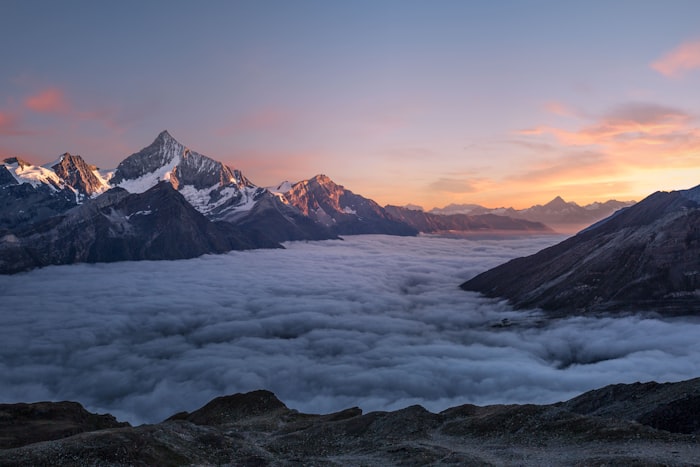
Zermatt's scenery is defined by a single, unmistakable icon: the Matterhorn. No mountain in the Alps — arguably in the world — has the same psychological impact. Its pyramid silhouette dominates every view, every photograph, and every moment of your stay. The surrounding bowl of 29 peaks over 4,000m makes Zermatt's mountain panorama genuinely unrivalled.
- The Matterhorn: most iconic mountain on Earth
- 29 peaks over 4,000m visible from town
- Car-free streets enhance the scenery
- Gorner Glacier — one of Europe's largest
- Every viewpoint feels like a postcard
Interlaken's setting is broader and more varied — tucked between Lake Thun and Lake Brienz, with the Eiger, Mönch, and Jungfrau rising above. It lacks a single iconic focal point like the Matterhorn, but the combination of turquoise lakes, lush valley, and dramatic peaks offers a more panoramic, less singular kind of beauty.
- Two lakes — Thun and Brienz — surround the town
- Views of the famous Eiger north face
- Lauterbrunnen valley: 72 waterfalls
- Grindelwald's dramatic cliff setting
- More varied landscape across the region
Activities & Adventure
What you actually do all day matters enormously. These two towns have very different activity personalities.
Zermatt is the world's premier mountaineering and skiing destination. Its 360km of ski runs, year-round glacier skiing, and hiking trails to high Alpine huts are world-class. Activities tend to be more focused and mountain-specific — this is not an extreme sports playground, but a refined Alpine experience.
- 360km of ski runs — one of Europe's largest
- Year-round skiing on the Theodul Glacier
- Matterhorn Glacier Paradise (3,883m)
- 200+ km of summer hiking trails
- World-class mountaineering base
- Scenic cogwheel railways to viewpoints
Interlaken is the undisputed adventure capital of the Alps — arguably of Europe. The sheer variety of activities available is extraordinary. From skydiving to bungee jumping, whitewater rafting to paragliding, it offers more adrenaline options in one small town than almost anywhere in the world. Excellent for groups with mixed interests.
- Paragliding over the Eiger & Jungfrau
- Skydiving from 4,000m altitude
- Bungee jumping from 134m Stockhorn Bridge
- Whitewater rafting on the Lütschine River
- Jungfraujoch — "Top of Europe" at 3,454m
- Lake swimming, kayaking, stand-up paddleboarding
Zermatt will make you feel small in the best possible way — humbled by mountains that have witnessed centuries. Interlaken will make you feel invincible, hurling yourself through the sky above lakes that look painted.
— Alpine Europe Travel
Budget & Value
Switzerland is expensive by any global standard, but there are meaningful differences between these two towns.
Zermatt is one of Switzerland's most expensive destinations. The car-free policy, premium brand image, and year-round ski season push prices up significantly. Expect to pay a premium of 30–50% over Interlaken for equivalent accommodation. Budget travelers can manage, but it requires planning.
- Budget hotel: CHF 120–200/night
- Mid-range hotel: CHF 250–400/night
- Ski day pass: CHF 85–95
- Matterhorn Glacier Paradise cable car: CHF 100
- Restaurant meal (mid): CHF 35–60/person
Interlaken offers significantly better value, with more budget accommodation options (including excellent hostels) and more affordable dining. Activity packages — especially the famous Jungfraujoch excursion — are expensive, but daily costs can be managed more easily than in Zermatt.
- Hostel: CHF 40–70/night
- Budget hotel: CHF 90–160/night
- Mid-range hotel: CHF 170–280/night
- Jungfraujoch return ticket: CHF 140–210
- Restaurant meal (mid): CHF 25–45/person
Stay in Täsch — the last car-accessible village 5km from Zermatt. Accommodation here costs 30–40% less. A shuttle train runs to Zermatt every 20 minutes (CHF 9 return). You get all the Zermatt experience at a fraction of the cost.
Getting There & Around
Zermatt is car-free — all vehicles are left in Täsch (paid parking) and visitors arrive by the Matterhorn Gotthard Bahn railway. This makes it feel wonderfully quiet and clean, but it also means your luggage needs to be manageable and all transport within the village is by electric taxi, horse carriage, or on foot.
- Direct train from Zurich via Visp (~3.5 hrs)
- Direct from Geneva via Visp (~4 hrs)
- Car-free village: electric taxis & walking only
- Excellent internal cable car network
Interlaken is exceptionally easy to reach and navigate. It has two train stations (Ost and West), direct connections to Zurich, Bern, Geneva, and Lucerne, and full car access. It also serves as a hub for trains up to the Jungfrau region, making day trips to Grindelwald, Lauterbrunnen, and the Jungfraujoch quick and easy.
- Direct train from Zurich (~2 hrs)
- Direct from Bern (~50 mins)
- Two train stations for easy transit
- Car-accessible; free parking available
- Hub for all Jungfrau region day trips
Vibe & Atmosphere
Zermatt has the feel of a refined, grown-up mountain village. Its car-free streets, well-heeled visitors, excellent restaurants, and deep mountaineering heritage give it a quiet sophistication. It's less a party town and more a place for long dinners, early starts for hikes, and genuine reflection in front of extraordinary scenery.
- Quiet, peaceful streets — no traffic noise
- Strong Swiss mountain village character
- Romantic atmosphere — excellent for couples
- Rich mountaineering culture & museums
- More international, upscale crowd
Interlaken is younger, louder, and more international — a place where backpackers, gap-year travelers, and adventure tour groups mix with Swiss families and older couples. The Höheweg promenade buzzes with energy, there's a lively bar and restaurant scene, and the town has a genuinely cosmopolitan, youthful atmosphere.
- Lively social scene — great for solo travelers
- Young, international crowd
- Active après-activity bar culture
- More casual, less formal atmosphere
- Better for groups and mixed-age travel
Food & Nightlife
Zermatt has outstanding dining — including several fine-dining restaurants and a strong Swiss-Italian Valais cuisine tradition. Fondue, raclette, and Walliser-style dishes are everywhere. The nightlife is low-key but refined — a few excellent bars and a couple of clubs. Not a party town, but deeply satisfying culinarily.
- Multiple award-winning restaurants
- Excellent Valais wine scene
- Authentic Swiss fondue & raclette
- Cozy mountain bar culture
Interlaken's restaurant scene is more varied and international — reflecting its diverse visitor base. Swiss classics sit alongside Asian, Indian, and Middle Eastern options. The nightlife is meaningfully more active, with several bars and clubs catering to the young adventure crowd. Budget-friendly options are far more plentiful.
- Wide variety of cuisines & price points
- Excellent budget dining options
- More active nightlife & bar scene
- Good options for dietary restrictions
Best Season to Visit
Winter (Dec–March): World-class skiing, snow-covered streets, magical atmosphere. Peak crowds and prices.
Summer (June–September): Excellent hiking, long days, Matterhorn views without snow, more affordable. Late June and September are the sweet spots — fewer crowds, lower prices, stunning light.
Year-round skiing on the Theodul Glacier makes Zermatt unique — the only major Swiss resort open 365 days a year.
Summer (June–September): Peak season and deservedly so. All adventure sports running, lakes open for swimming, Jungfraujoch access optimal, maximum daylight. July–August are busiest.
Spring & Autumn: Shoulder seasons offer excellent value, quieter trails, and beautiful scenery without the crowds.
Winter: Good skiing access via trains to Grindelwald/Wengen, but the valley itself can feel grey. Less compelling than Zermatt in winter.
🏆 Final Scorecard
| Category | Zermatt ⭐ | Interlaken ⭐ | Winner |
|---|---|---|---|
| Scenery & Setting |
★★★★★
|
★★★★★
|
🏔 Zermatt |
| Activities & Adventure |
★★★★★
|
★★★★★
|
🌊 Interlaken |
| Budget & Value |
★★★★★
|
★★★★★
|
🌊 Interlaken |
| Accessibility |
★★★★★
|
★★★★★
|
🌊 Interlaken |
| Atmosphere & Vibe |
★★★★★
|
★★★★★
|
🤝 Tie |
| Food & Nightlife |
★★★★★
|
★★★★★
|
🤝 Tie |
| Photography |
★★★★★
|
★★★★★
|
🏔 Zermatt |
The Verdict: Which One Is Right for You?
Based on everything above, here's the clearest possible guide to making your decision:
Frequently Asked Questions
Absolutely — and we recommend it if you have 8+ days. Spend 3 nights in Zermatt and 3 nights in Interlaken for a comprehensive Swiss Alps experience. The journey between them takes about 4 hours by train via Brig and Spiez. With a Swiss Travel Pass, the entire journey is covered. This combination gives you the iconic Matterhorn scenery plus the adventure variety of the Jungfrau region — the best of both worlds.
Interlaken is generally better for a first-time visitor. It's easier to reach, more affordable, and serves as an excellent hub for exploring the broader Jungfrau region (Grindelwald, Lauterbrunnen, Jungfraujoch). First-time visitors are often overwhelmed by Switzerland's transport and costs — Interlaken's accessibility and budget-friendliness reduces that friction considerably. That said, if the Matterhorn has always been your dream, start with Zermatt — some dreams shouldn't wait.
For Zermatt, a minimum of 2 nights is needed (to allow for one cable car day and one hiking day). Ideally 3–4 nights to fully explore the surroundings. For Interlaken, 3–4 nights gives you time for the Jungfraujoch, Grindelwald, Lauterbrunnen, and at least one adventure activity. If you only have 2 nights in Interlaken, prioritize the Jungfraujoch and one adventure sport — that covers the essential experience.
Both are extraordinary, but they're quite different. The Jungfraujoch (3,454m) is Europe's highest railway station — the journey through the mountain by cog railway is half the experience. The views of the Aletsch Glacier from the top are spectacular. The Matterhorn Glacier Paradise (3,883m) is higher, with arguably more dramatic 360° panoramic views of 14 countries on a clear day, and the novelty of a year-round glacier. If forced to choose: Jungfraujoch for the journey; Matterhorn Glacier Paradise for the views.
Zermatt wins winter convincingly. Its 360km of runs, year-round glacier skiing, world-class ski infrastructure, and magical snow-covered streets make it one of Europe's finest winter destinations. Interlaken in winter can feel grey and damp in the valley (though the skiing up in the Jungfrau region via train is good). For a ski holiday, Zermatt is the clear choice. For a winter break that isn't primarily about skiing, Zermatt's cozy village atmosphere also wins.
🏔 Next Up: Day 4 — The Complete Planning Guide
Now that you've chosen your base, our Day 4 post walks you through everything you need to plan a perfect Swiss Alps trip from scratch — budgets, transport, packing, and booking timelines.
📖 Read Day 4 →Final Verdict
After seven rounds of comparison, the honest truth is this: Zermatt and Interlaken are both extraordinary. Zermatt wins on pure scenery, photography, skiing, and romantic atmosphere. Interlaken wins on activity variety, value, accessibility, and social energy.
Choose Zermatt if you want to be stopped in your tracks by a single, unforgettable mountain. Choose Interlaken if you want to throw yourself off things, paddle turquoise lakes, and have the Swiss Alps on a budget. And if someone else is paying? Do both. You'll thank us later.
Team Zermatt or Team Interlaken? Drop your pick in the comments — and tell us what made you choose! 🏔🌊
Comments
Post a Comment