Top 10 Most Stunning Alpine Village you've Never Heard of | Alpine Europe Travel
Top 10 Most Stunning Alpine Villages You've Never Heard Of
Everyone knows Hallstatt. Everyone's seen Zermatt. But the Alps have dozens of villages so achingly beautiful — so quietly extraordinary — that most travelers walk right past them. These are the places where shepherds still drive flocks along medieval paths, where frescoed chapels cling to granite cliffsides, and where a glass of local wine on a terrace at sunset feels like the most perfect moment in the history of human civilization. We've found ten of them. Consider this your secret map.
The Swiss Alps and surrounding Alpine regions hide hundreds of villages that never made it onto the Instagram algorithm's radar — and that's precisely what makes them extraordinary. Free from souvenir shops and selfie crowds, these are places where real Alpine life still pulses: old women hanging geraniums from wooden balconies, farmers leading cattle through cobblestone alleys, and church bells marking the hours across valleys that time seems to have forgotten.
Here are the 10 most stunning Alpine villages that deserve to be on every traveler's itinerary — and almost never are.
Travel tip: All 10 villages in this guide are reachable by public transport or a short drive from a major Alpine hub. We've included practical access info in each entry so you can plan with ease.
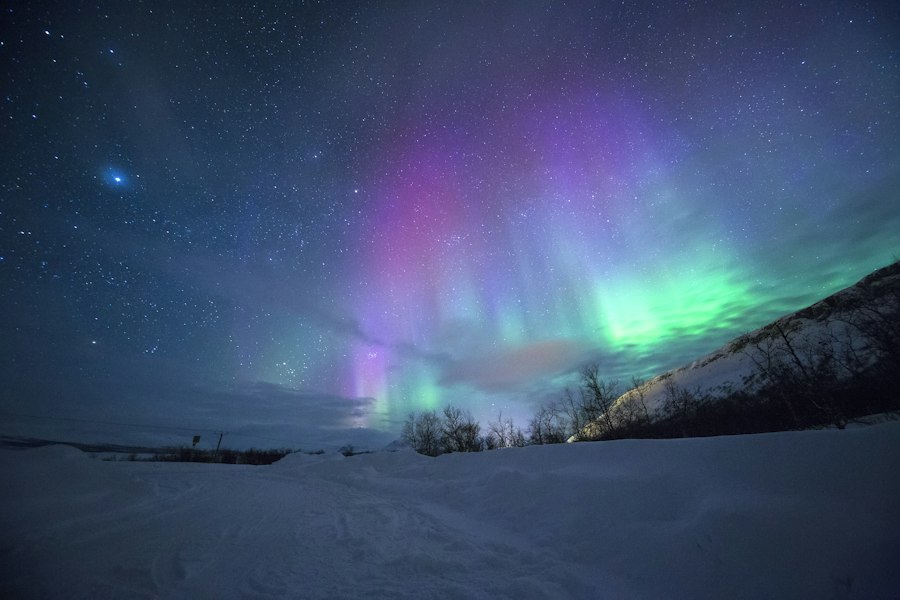
If there's one Alpine village that looks like it was preserved in amber since the 15th century, it's Grimentz. Tucked into the Val d'Anniviers in canton Valais, this impossibly charming hamlet is defined by centuries-old mazots (wooden granary huts) blackened by the sun, propped up on mushroom-shaped stones to keep out rodents, and draped in cascading red geraniums. The main street is so narrow, so perfectly preserved, and so completely devoid of tourist infrastructure that wandering through it feels like stepping into a film set — except it's achingly real.
Above the village, the Moiry Glacier descends from a ring of 3,500m+ peaks, and a stunning lake of glacial meltwater reflects the mountains in an almost surreal mirror. The hiking here — particularly the high-altitude circuit around the glacier — ranks among the finest in Switzerland, yet the trails are a fraction as busy as those in the Jungfrau region.
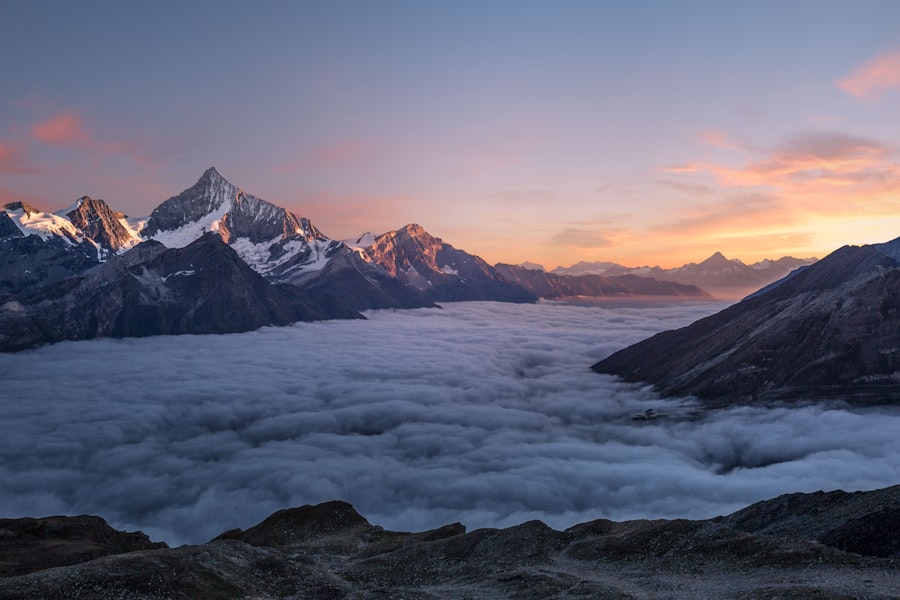
Painter Giovanni Segantini called Soglio the "gateway to paradise" — and standing on the stone terrace of the 17th-century Palazzo Salis, overlooking a sea of chestnut forests with the granite Sciora peaks rising above like cathedral spires, it's almost impossible to disagree. Soglio is technically Swiss, but culturally Italian — a fascinating border blend that gives it a uniquely warm, sun-drenched character that most Swiss villages lack.
The village is most dramatically beautiful in October, when the chestnut forests turn gold and the granite walls glow amber in the late light. But the famous Via Bregaglia walking route, which links Soglio to nearby villages across the valley, makes it equally rewarding in summer. This is a village that rewards slow, aimless wandering far more than itinerary-ticking.
There may be no more dramatically photogenic village in all of the Alps than Heiligenblut. Its slender Gothic church spire rises from a narrow rocky ridge with the Großglockner — Austria's highest mountain at 3,798m — looming directly behind it like a cathedral of rock and ice. Every angle of this village looks like a professional photographer composed it. The composition is so perfect it almost feels unreal.
The village sits at the base of the legendary Großglockner High Alpine Road, one of Europe's most spectacular mountain passes. In summer, the drive (or cycle) up to the Edelweißspitze viewpoint offers one of the most unforgettable panoramas on the continent. In winter, Heiligenblut transforms into an intimate ski village with excellent piste access and without the crowds of more famous Austrian resorts.
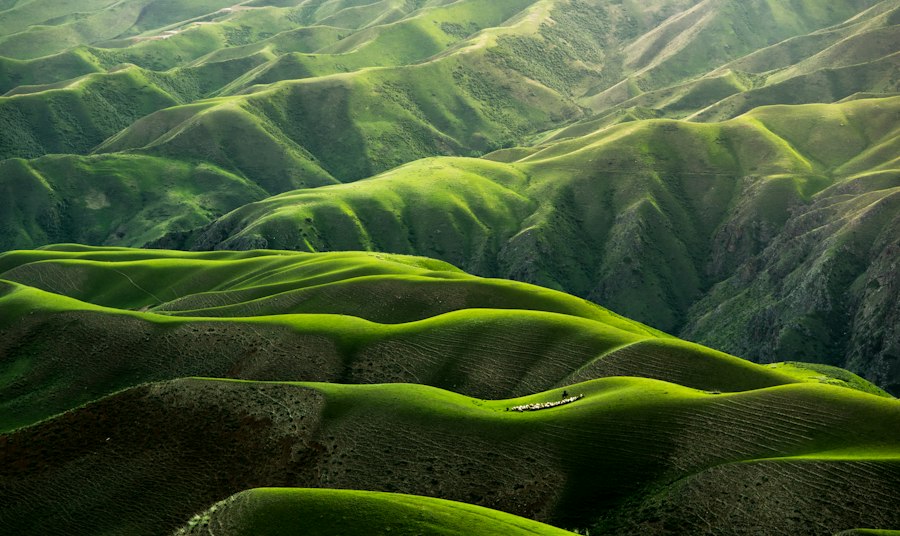
Corippo is Switzerland's smallest municipality — a village of roughly 13 permanent residents clinging to a steep hillside above the impossibly turquoise Verzasca River. It should have died decades ago as its population dwindled. Instead, it was reborn as one of Europe's most innovative travel projects: an albergo diffuso (scattered hotel) where the village's ancient stone houses have been converted into interconnected guestrooms, with communal dining and village life as the experience itself.
The valley below is famous for the Roman Bridge (Ponte dei Salti) and crystalline green pools perfect for wild swimming. Above, trails wind through terraced vineyards and chestnut groves with sweeping views over the Ticino valley. It's a destination that rewards slow, unhurried exploration — which is rather the point.
The best Alpine villages aren't on any tourist map. They're the ones where the only sound is birdsong, the only crowds are wildflowers, and the only agenda is wondering why it took you this long to find them.
— Alpine Europe Travel
Technically part of the Julian Alps rather than the Swiss Alps, Bovec in Slovenia earns its place on this list by being quite possibly the most beautiful river valley in all of Europe — and one of the least known. The Soča River, which flows through the town, is an almost impossible shade of electric turquoise-green: a color so vivid and clear that it looks digitally enhanced in every photograph, yet is even more extraordinary in person.
Bovec is the adventure capital of the Julian Alps — a base for whitewater kayaking, canyoning, paragliding, and some of the finest hiking in Central Europe. The surrounding Triglav National Park is Slovenia's only national park and one of the most unspoiled mountain landscapes in Europe. At prices roughly half of Switzerland, Bovec offers Alpine grandeur on a genuine budget.
Regularly voted one of Switzerland's most beautiful villages, Morcote sits on a narrow promontory jutting into Lake Lugano with the grace of an Italian lakeside town and the precision of Swiss infrastructure. Its portici (arcaded walkways), terracotta-roofed houses, and the 16th-century Church of Santa Maria del Sasso — reached by a 400-step staircase lined with frescoes — create a visual richness unlike any other lakeside village in Switzerland.
The Parco Scherrer botanical garden above the village is a hidden gem: an eccentric private garden filled with statues, exotic plants, and architectural follies from around the world, with sweeping views over the lake. Morcote is comfortably reached from Lugano by boat — which is, of course, the only way to arrive properly.
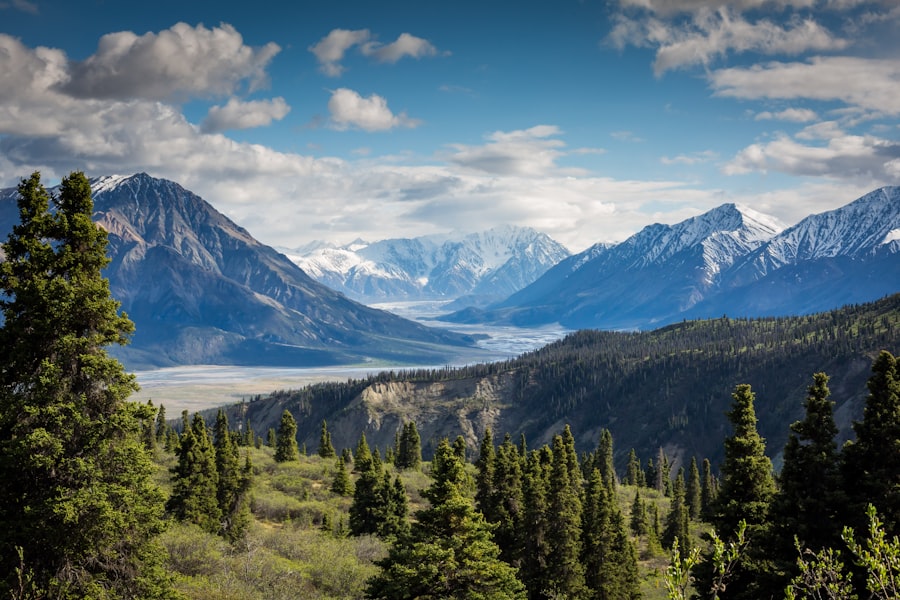
San Lorenzo in Banale is one of Italy's "Most Beautiful Villages" (I Borghi più Belli d'Italia) — a designation that in this case is not just deserved but wildly understated. This ancient stone village in the shadow of the Adamello Brenta Nature Park looks like someone froze a medieval settlement in time and surrounded it with the finest mountain scenery in northern Italy. The malghe (mountain dairies) still operate seasonally, and the local cheese — particularly the Casolet — is reason enough to visit.
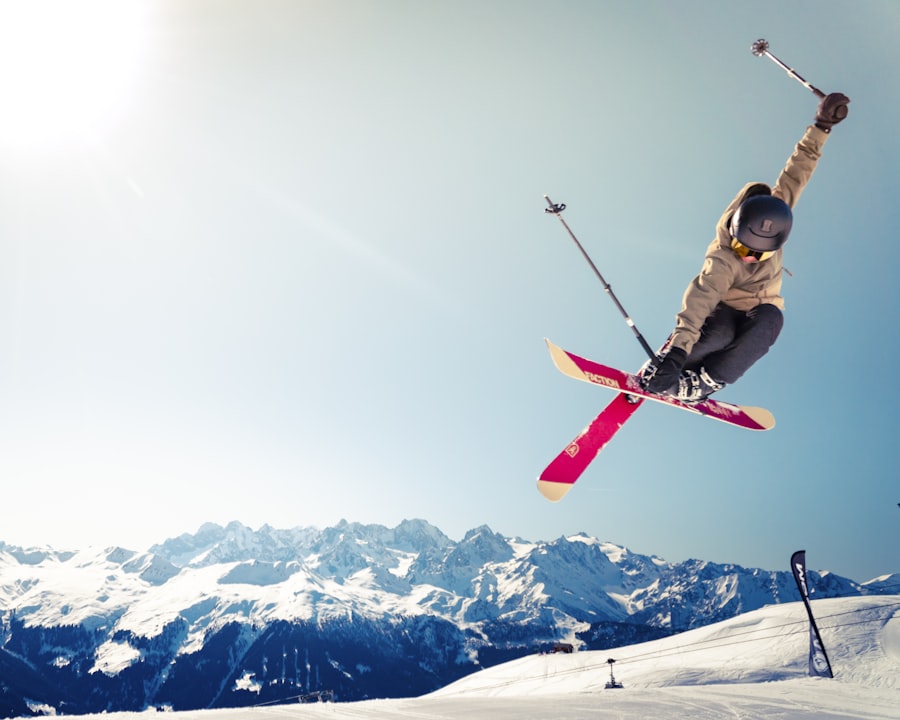
Lech am Arlberg is Austria's most exclusive ski resort — the winter playground of European royalty and a select global elite — yet it somehow retains the genuine character of a working mountain village. Unlike purpose-built ski stations, Lech grew organically from a farming settlement, and its old wooden farmhouses, Baroque church, and rushing Lech river give it an authenticity that no amount of luxury development has managed to erase. In summer, it transforms completely: the slopes turn to wildflower meadows, the lifts carry hikers instead of skiers, and prices drop dramatically.
While the mega-resort of Les Deux Alpes thunders just above it via cable car, Venosc below remains completely unchanged — a medieval stone village of crooked alleys, stone fountains, and artisan workshops where weavers, potters, and woodcarvers still ply their trades. It's one of the most genuinely authentic villages in the French Alps: no souvenir shops, no après-ski bars, just craftspeople doing what their families have done here for generations.
The paradox of Venosc — a quiet medieval village connected by gondola to one of France's busiest ski resorts — makes it one of the Alps' most interesting contrasts. In summer, trails from the village lead toward the Tête de la Maye and the edge of the vast Écrins National Park.
Just two kilometres from the glitz of St. Moritz — and light years away in character — Celerina is the Engadin's best-kept secret. Its sgraffito-decorated Engadin houses (a form of ornamental plasterwork unique to Graubünden), Romansh street signs, and genuinely village-scale pace make it feel like a world apart from its famous neighbor. The parish church of San Gian, dating to the 11th century, is one of the oldest and most beautifully preserved Romanesque churches in the Alps.
Celerina shares the same extraordinary mountain access as St. Moritz — Corvatsch, Diavolezza, and Corviglia ski areas — but room rates are typically 30–40% lower. It's also home to the legendary Olympic bobsled run, open to the public in winter for a stomach-dropping, white-knuckle, one-minute descent that no one forgets in a hurry.
Quick Village Comparison
Planning which village to prioritize? Here's a side-by-side snapshot to help you decide:
| Village | Country | Best For | Budget Level |
|---|---|---|---|
| Grimentz | 🇨🇭 Switzerland | Architecture & Hiking | Moderate |
| Soglio | 🇨🇭 Switzerland | Art & Autumn Colors | Moderate |
| Heiligenblut | 🇦🇹 Austria | Photography & Drama | Budget-Friendly |
| Corippo | 🇨🇭 Switzerland | Unique Stay & Swimming | Moderate |
| Bovec | 🇸🇮 Slovenia | Adventure & Value | Best Value |
| Morcote | 🇨🇭 Switzerland | Lake & Architecture | Moderate |
| San Lorenzo | 🇮🇹 Italy | Food & Culture | Budget-Friendly |
| Lech am Arlberg | 🇦🇹 Austria | Luxury Skiing | Premium |
| Venosc | 🇫🇷 France | Artisan Crafts | Budget-Friendly |
| Celerina | 🇨🇭 Switzerland | Skiing (St. Moritz Hack) | Mid-Range |
- Arrive by public transport where possible — narrow village lanes often have no parking, and arriving by PostBus or train is always the more scenic option anyway.
- Visit midweek — weekends bring day-trippers even to the quieter villages. Monday to Thursday you'll often have places almost to yourself.
- Learn three words of the local language — "Grüezi" in Swiss German, "Bonjour" in French, "Ciao" in Italian, "Grüß Gott" in Austrian. Locals notice and appreciate the effort immediately.
- Book accommodation 3–4 months ahead — small villages have limited beds. The best guesthouses fill quickly, especially July–August and December–March.
- Carry cash — smaller villages often have no ATM and some guesthouses and restaurants are cash-only. Carry CHF in Switzerland, EUR elsewhere.
- Pack layers, always — mountain weather shifts dramatically. A glorious morning can become a thunderstorm by 2pm. Never go hiking without a rain layer.
Frequently Asked Questions
Morcote and Corippo are both reachable from Zurich in about 2.5–3 hours by train to Lugano or Locarno. Celerina is about 3.5 hours by direct train to St. Moritz. Grimentz requires about 3 hours via Sierre. All are comfortably doable as short overnight trips from Zurich.
Soglio is the hands-down winner for romance — an ancient stone village draped in chestnut forests, with a candlelit 17th-century manor hotel and views that make dinner feel like a scene from a film. Morcote is a close second, especially arriving by boat at sunset. Grimentz rounds out the top three for its utter quietness and local wine culture.
Yes! Bovec is excellent for active families (swimming, gentle hikes, kayaking). Corippo's Verzasca Valley has world-class wild swimming in safe emerald pools. Celerina is perfect for families who want easy access to skiing with a quieter base. Lech am Arlberg has outstanding children's ski schools and summer activity programmes.
Bovec, Slovenia is by far the most budget-friendly — accommodation, food, and activities cost roughly 40–60% less than equivalent options in Switzerland. Within Switzerland, Venosc (France) and Heiligenblut (Austria) are significantly cheaper than Swiss options while delivering comparable mountain drama.
🌿 Want the Full Village Guide?
Subscribe to our 31-Day Alpine Europe series and get detailed itineraries, packing lists, and insider tips for every corner of the Alps — delivered straight to your inbox.
📬 Subscribe to the SeriesFinal Thoughts
The Alps are famous for the Matterhorn, Hallstatt, and Grindelwald — and those places are famous for a reason. But the region's true soul lives in villages like Grimentz and Soglio and Corippo, where tourism hasn't yet smoothed the edges, where the local wine tastes like it was made for the people who actually live there, and where the morning light comes over the mountains and nobody is there to see it except you.
These are the places that stay with you. Not because they were on a list. But because you found them, and for a moment, they felt like yours.
Which of these 10 villages is calling to you most? Drop us a comment below — or if you've already visited one of them, we'd love to hear your story. 🌿
Comments
Post a Comment